By : Wiriadi Sutrisno
aswinnews.com
Source: Googel Image. 2026
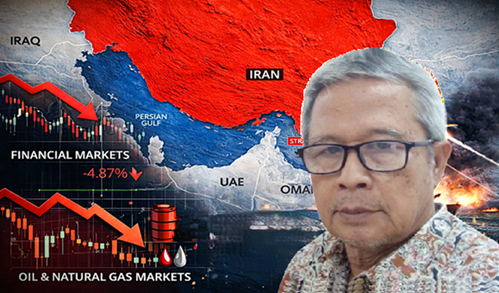
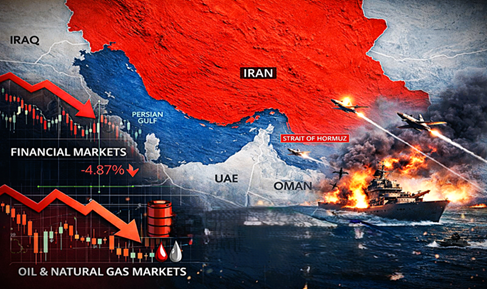
The IAI War (Iran vs. America & Israel) has the potential to suppress Indonesia’s economic growth through a surge in global oil prices and supply disruptions in the Strait of Hormuz. Global oil prices turned bullish per barrel in May 2026, with Brent Crude recorded at $105 and WTI at $100. Both experienced significant fluctuations after sharp spikes in previous days, reflecting market reactions to geopolitical tensions and economic factors affecting global energy supply and demand. Globally, the crisis in the Strait of Hormuz has triggered negative sentiment shaking the markets through two major channels: fundamental factors and technical factors. Both influence one another, although they operate differently. Here under some issues related with topic discussion, such as:
1. Fundamental Factors Being Disrupted
Global economic turmoil can be observed through the dynamics of supply-demand conditions, business, and geopolitics in:
Energy & Oil
Disruptions in the Strait of Hormuz as a vital global oil export route will cause oil prices to surge sharply, logistics and shipping insurance costs to rise, and energy-importing countries such as Indonesia to face inflationary pressure.
Global Inflation
Rising oil prices trigger increases in food prices, industrial production costs, and the possibility of interest rates remaining high for longer. This creates negative sentiment for growth stocks, the consumer sector, property, and technology startups.
Risk-Off Sentiment
Global investors tend to move toward safer assets such as gold, the US dollar, and US government bonds. Meanwhile, risky assets such as emerging market stocks, crypto, and developing countries’ currencies come under pressure.
2. Technical Factors Being Shaken
These are relate to market psychology, charts, liquidity, and trader behavior.
Increased Volatility
During geopolitical escalations, candlesticks become erratic, spreads widen, and fake breakouts often appear, causing spikes in indicators such as ATR, VIX, and trading volume.
Breakdown of Support/Resistance
Major negative news sentiment can weaken strong support levels, while resistance levels may be broken without normal validation because the market moves based on panic buying and selling.
Algorithms & Smart Money
Trading bots and major institutions often immediately sell risk-on assets and hedge into gold or oil, triggering cascade liquidations. In crypto, this may result in long squeezes, liquidation chains, and extreme funding rates.
Changing Market Correlations
Normally, stocks and crypto move differently. However, during crises all risk assets may decline simultaneously, causing technical analysis to temporarily fail
3. Main Impact of the IAI War and the Strait of Hormuz Crisis on Indonesia’s
Economic Growth in 2026:
The continuing effects of the IAI war crisis and the Strait of Hormuz tensions are expected to affect Indonesia’s economic growth in 2026 through rising energy prices, fiscal pressure, currency volatility, and financial market instability. As a net oil-importing country, Indonesia remains vulnerable to global geopolitical disruptions, as reflected in the following economic indicators: Here are a revised and polished version with improved clarity, grammar, flow, and a more formal analytical tone:
- Energy and Fiscal Sector:
Rising global oil prices may significantly increase the government’s energy subsidy burden. It is estimated that every USD 1 increase in crude oil prices per barrel could raise fuel subsidy expenditures by approximately IDR 6.8 trillion annually. - Inflation and Purchasing Power:
Higher oil prices are likely to trigger inflation through increased fuel, transportation, and logistics costs. This situation may reduce household purchasing power and weaken domestic consumption. - IDRExchange Rate:
Geopolitical uncertainty tends to encourage capital outflows from emerging markets, including Indonesia, thereby exerting downward pressure on the Rupiah against the US Dollar. - Capital Markets & Investment:
The crisis may lead to declines in the Indonesia Stock Exchange Composite Index (IHSG) and increase volatility in government bond markets due to foreign investor withdrawals and heightened market uncertainty
4. Government Anticipation Measures In response to global economic uncertainty caused by the IAI war and the Strait of Hormuz crisis, the economic team of the Red and White Cabinet, under the direction of the President of Indonesia, has implemented several anticipatory measures to safeguard national economic stability, including:
- Energy Diversification: The government is securing energy import sources outside the Middle East to reduce dependence on conflict-prone regions.
- Monetary Policy Measures:
Bank Indonesia has undertaken strategic monetary policies to maintain IDR stability and mitigate the financial impacts of global geopolitical tensions. - State Budget (APBN) Adjustments:
The government is revising budget assumptions and fiscal targets to anticipate potential increases in subsidy expenditures and fiscal deficits. Despite heightened global risks,
Indonesia’s economic performance remained relatively resilient. Economic growth in Q4 2025 reached 5.39%, reflecting continued strength in domestic economic activity. Furthermore, Indonesia’s economy grew by 5.61% year-on-year (y-o-y) in Q1 2026, surpassing the previous 5% growth trend and moving closer to the government’s 6% growth target. This growth was supported by strong performance in the manufacturing, accommodation, food and beverage, and transportation sectors. The government continues to accelerate priority programs to sustain economic momentum and strengthen national resilience amid ongoing global uncertainty.
5. Key Points on Indonesia’s Economic Growth Achievements as of May 2026. Several indicators highlight the achievements of economic growth, including:
- Q1 2026 Economic Achievement:
Statistics Indonesia (BPS) recorded Indonesia’s economic growth at 5.61% year-on-year (y-o-y) in Q1 2026, exceeding the market consensus estimate of 5.3% and surpassing the previous quarter’s performance. - Breaking the 5% Growth Trend:
The Minister of Finance stated that this achievement signals Indonesia’s gradual emergence from the long-standing pattern of economic growth remaining around 5%. - Government Focus for 2026:
The government is targeting economic growth close to 6% through the acceleration of priority programs, governance transformation, and increased investment realization
To achieve the 2026 growth target of 6% as an initial step toward the medium-term target of 8%, economists emphasize the importance of increasing investment levels to approximately 40% of GDP, compared to around 30% recorded in Q3 2025. The sectors contributing most significantly to economic growth include manufacturing, transportation, accommodation and food-beverage services, as well as other service sectors. Furthermore, the Minister of Finance expressed optimism that the positive growth trend will continue in the coming quarters, following Q1 2026 economic growth of approximately 5.5%–5.61%. Sustained growth above 6% could provide stronger fiscal space for the government to introduce additional economic policies, including potential adjustments to taxation in the digital marketplace sector. Overall, these developments reflect the Indonesian Government’s optimism in maintaining economic resilience amid continuing global economic and geopolitical pressures.(Wir@Aswin2026)