
🖋️ By: Aceng
🗞️ Editor: Kenzo | AswinNews.com – Sharp, Accurate, Balanced, and Reliable
🎓 Commentary: Dr. Al Chaidar Abdurrahman Puteh – Lecturer of Anthropology, Universitas Malikussaleh, Lhokseumawe, Aceh
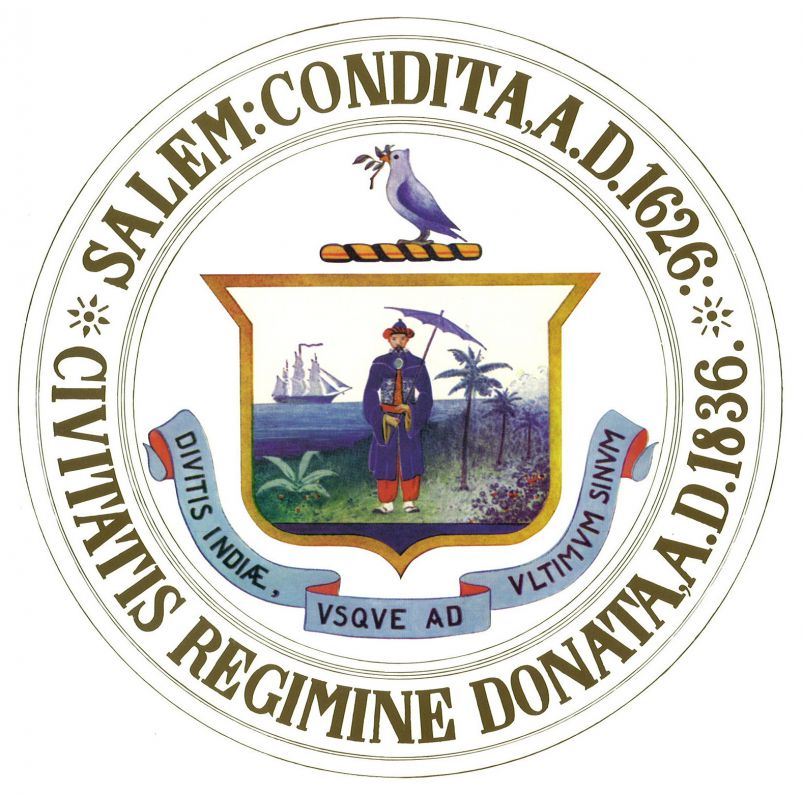
SALEM, MASSACHUSETTS, USA & BANDA ACEH, INDONESIA – As Salem, Massachusetts, reconsiders the future of its historic city seal, thousands of miles away, an unexpected yet passionate voice emerges in defense of it: the people of Aceh, Indonesia. Rather than seeing the seal’s image as offensive or outdated, many Acehnese regard it as a rare and respectful recognition of their ancestors’ pivotal role in global maritime trade — and a cultural bridge worth preserving.
“The seal is a historical artifact,” affirms Prof. Cut Dewi, PhD, an academic from Banda Aceh. Echoing her view, Acehnese scholar Reza Idria simply states, “Leave the seal alone!”
The 1839 Salem City Seal portrays a shirtless Sumatran man — widely believed to be Acehnese — standing amidst tropical foliage, accompanied by the Latin motto “Divitis Indiae usque ad ultimum sinum” (“To the farthest port of the rich East”). The seal was designed during an era when Salem flourished from its trade with Sumatra, particularly the lucrative pepper trade. While some voices in the U.S. call for a redesign due to perceived colonial or stereotypical elements, many Acehnese see a different story — one of agency, respect, and historical truth.
“For us, the seal is a source of pride,” explains historian Cut Sarah from Banda Aceh. “It recognizes Aceh’s place in global commerce. We were not passive subjects, but active partners in one of the most important trading networks of the 19th century.”
Indeed, Aceh was once a powerful sultanate known for its strategic trade routes and global connections. The depiction of an Acehnese merchant on an American city seal is, for many, a rare acknowledgement of that global stature.
The debate in Salem over the seal’s symbolism intensified after several misinterpretations surfaced — some observers even mistook the figure’s attire for Chinese clothing. Scholar Michael Feener pointed out that such confusion shows how easily the seal’s meaning can be distorted without historical context. Others have raised concerns about possible bias within the city’s Seal Task Force, suggesting that alternative voices — including those from Aceh — deserve more recognition in the deliberation process.
“When we see that seal, we see a reflection of our history,” says Muhammad Rizki, a community leader in Aceh. “It’s not just Salem’s story; it’s a shared legacy. Changing it would be like erasing a chapter from both our histories.”
This collective sentiment has galvanized support across Aceh — from academics and civic leaders to ordinary citizens. They emphasize that the figure on the seal isn’t a generic ‘Oriental’ caricature but a distinctly Acehnese identity rooted in historical record. They call for greater cross-cultural understanding and historical literacy, rather than viewing the seal solely through a modern lens.
“Symbols have multiple meanings,” says Dr. Al Chaidar, anthropologist at Universitas Malikussaleh. “What may appear problematic in one cultural context can be a badge of honor in another. Erasing the seal would erase an opportunity to educate and connect across continents.”
As the City of Salem debates whether to retain, revise, or replace its emblem, the message from Aceh is loud and clear: Preserve the seal not only for what it meant, but for what it still means — a symbol of shared history, global connection, and mutual respect across oceans and time.


