✍️ Journalist: Mohammad Ismail
📸 Contributor: Dusun Task Force Team
🗞️ Editor: Kenzo – Editorial Team ~ sharp, accurate, reliable, balanced and updated
Jombang, November 3, 2025 | Aswinnews.com —
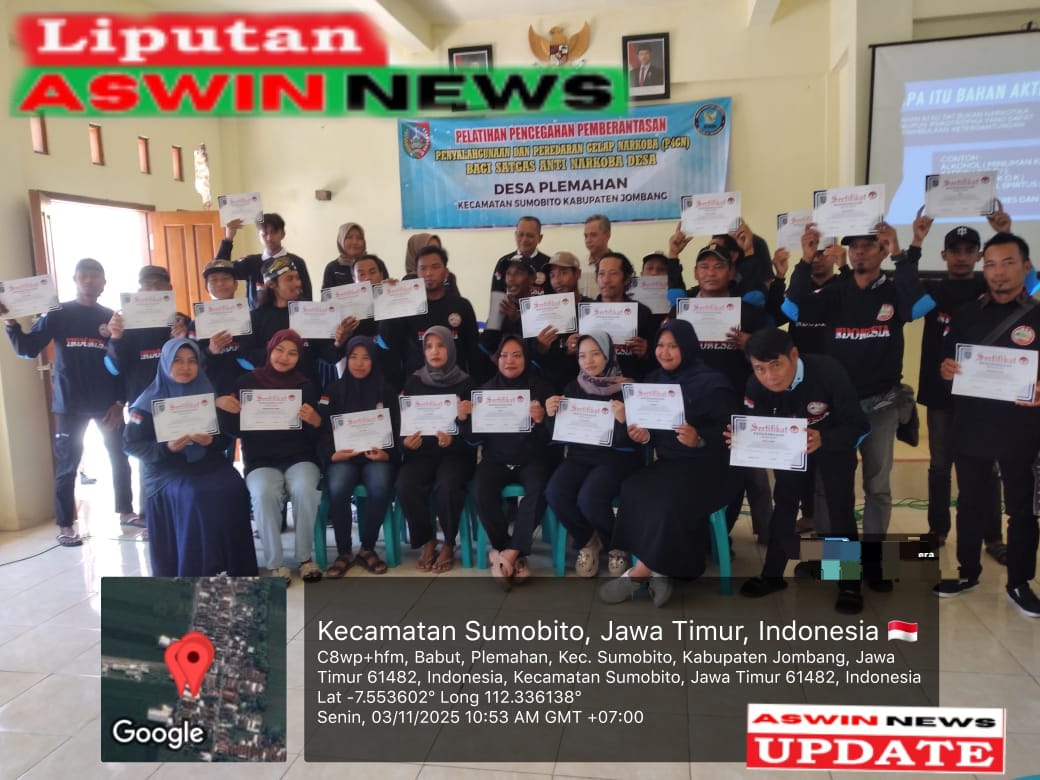
The Government of Plemahan Village, Sumobito Subdistrict, Jombang Regency, has officially established and inaugurated the Task Force for the Prevention, Eradication, Abuse, and Illicit Trafficking of Narcotics (P4GN).
The event, held at the Plemahan Village Hall, gathered 30 task force members representing five hamlets, each sending six participants. This initiative marks a concrete step in the village’s commitment to realizing a Drug-Free Village (Desa Bersinar) while strengthening synergy between the government, community, and relevant institutions in combating narcotics at the grassroots level.
Training Focus: Building Skilled and Vigilant Task Forces
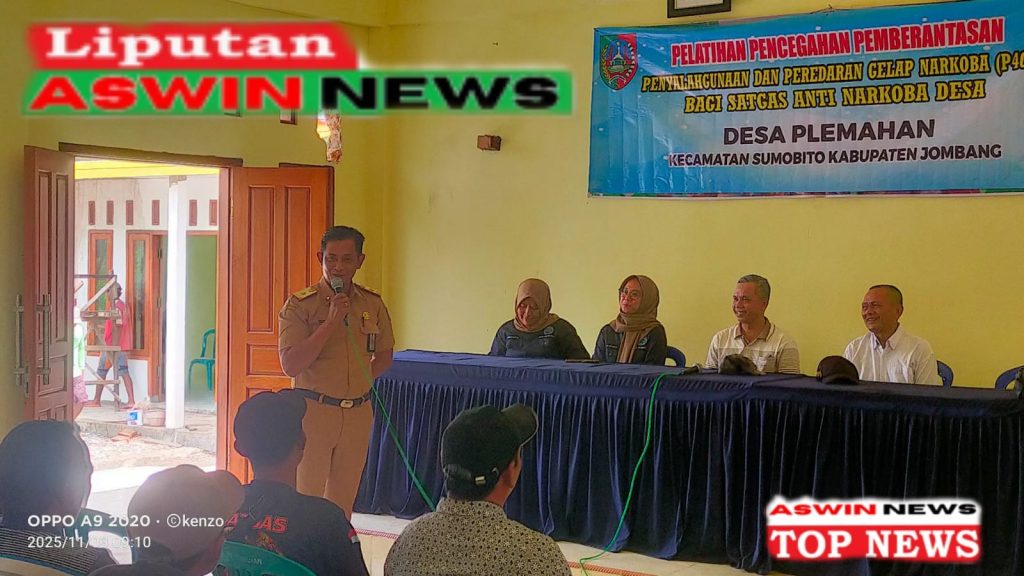
In his remarks, Head of the Jombang Regency National and Political Unity Agency (Bakesbangpol), Budi Winarno, S.T., M.Si., emphasized the importance of enhancing the capacity of task force members as the front line in public education on drug prevention.
“The P4GN task force should stand at the forefront of creating drug-free environments and act as a catalyst for behavioral change within the community,” he stated.
Budi also expressed appreciation for Plemahan Village’s proactive commitment to supporting the government’s national program toward the realization of ‘Desa Bersinar’ – Clean from Drugs Villages.
BNN Support: Strengthening Capacity and Early Detection
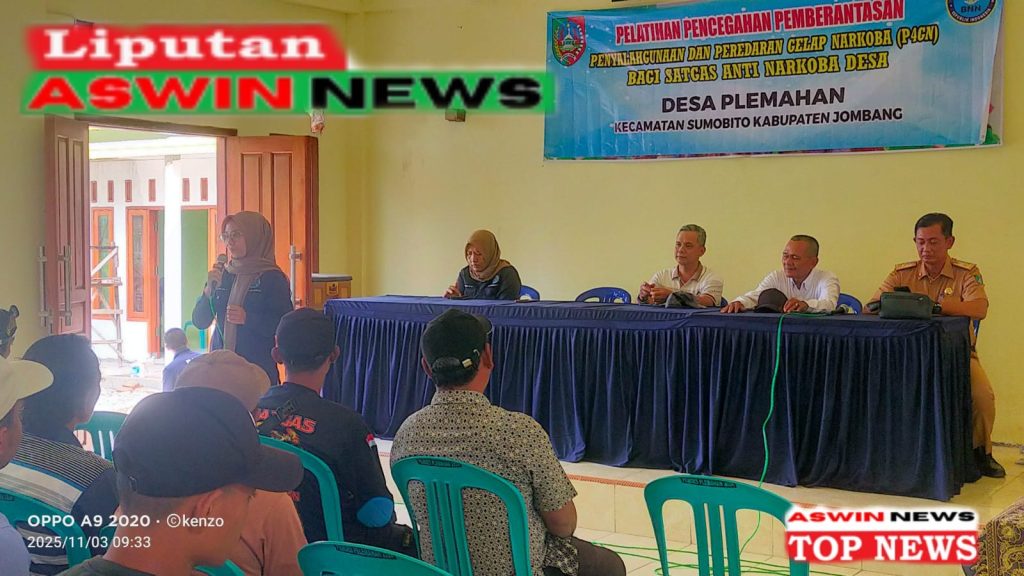
Representatives from the National Narcotics Agency (BNN) Jombang, Arumi and Reny, Heru, provided technical guidance and counseling to participants.
Arumi highlighted the importance of empowering the task force to act not only as reporters but also as facilitators and educators in the community.
“Task forces must be able to detect early signs of drug abuse, promote periodic urine tests in their communities, and build cross-sectoral networks to ensure preventive measures are effective,” Arumi explained.
She also underlined the need for close collaboration among village authorities, law enforcement, and BNN to ensure a sustainable community-based prevention strategy.
Training Modules: From Legal Frameworks to Case Management
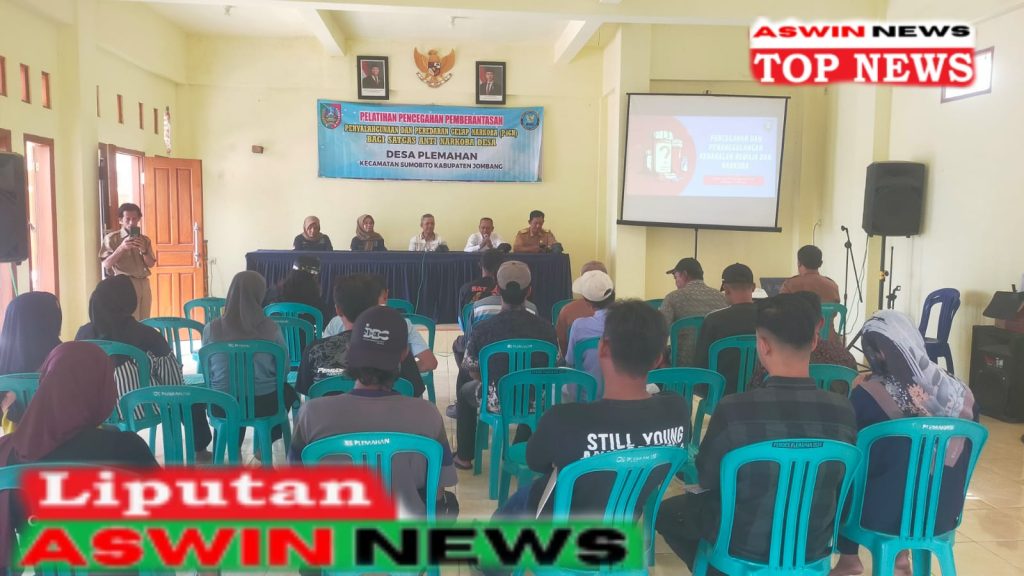
According to Latiyf Ridlo, Chairperson of the Organizing Committee, the participants received several comprehensive modules designed to strengthen both their technical and managerial skills, including:
Legal Basis of P4GN and national anti-narcotics policies.
Types and Impacts of Drugs, covering physical, psychological, and social consequences.
Roles and Functions of the P4GN Task Force in local prevention systems.
Effective Communication and Socialization Techniques for public outreach.
Case Management and Rehabilitation Procedures for victims of drug abuse.
The materials were delivered through interactive sessions, practical simulations, and direct discussions with experts from BNN and Bakesbangpol.
Inauguration and the Village Government’s Commitment
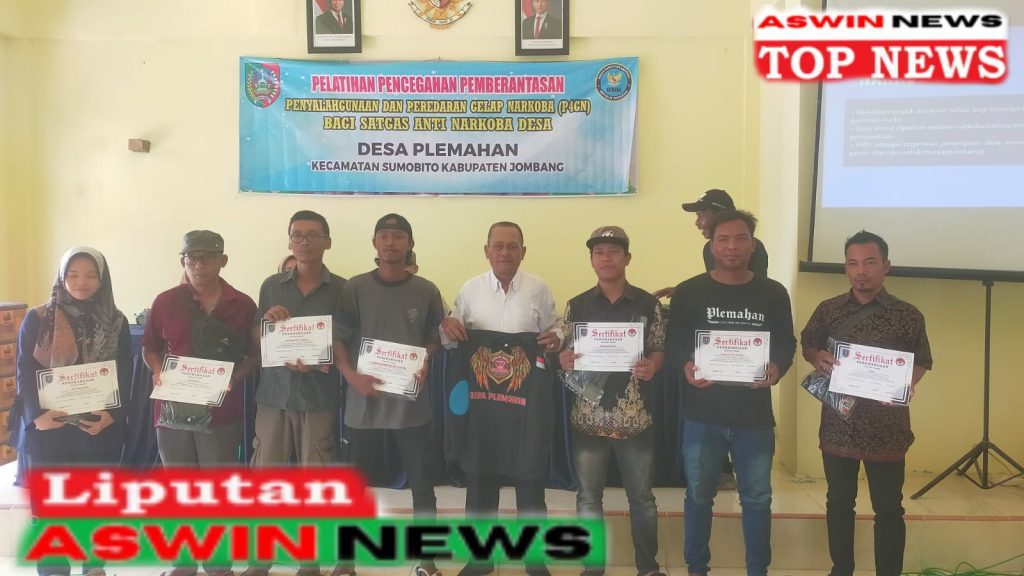
At the closing ceremony, Plemahan Village Head, Chamami, officially handed over uniforms and certificates to all newly inaugurated P4GN members.
“Community participation is the key to fighting narcotics. Through this training and inauguration, we hope every resident becomes more aware of the dangers of drugs and their impact on social order and public safety,” said Chamami.
He also stated that such activities will continue as part of the village’s long-term commitment to strengthening social resilience against the threat of drug abuse.
Editorial Note
The establishment and inauguration of the P4GN Task Force in Plemahan Village demonstrate the village’s strong commitment to supporting the national strategy for a Drug-Free Indonesia.
The collaboration between the Village Government, Bakesbangpol, and BNN serves as a model of community-based cooperation that can be replicated across other regions.
Concrete initiatives like this not only enhance prevention efforts but also foster collective awareness that the fight against drugs begins at the smallest social unit — the family and the village.