Yogyakarta – AswinNews.com —
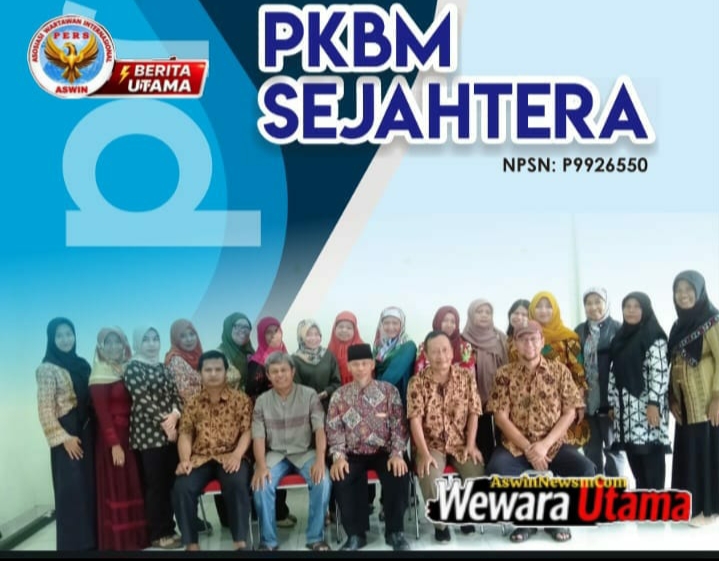
The Community Learning Activity Center (PKBM) Sejahtera continues to demonstrate its commitment to improving the quality of public education through nonformal education pathways.
The institution serves as a solution for people who need flexible, inclusive, and up-to-date access to education.
PKBM Sejahtera provides a learning platform for individuals from diverse backgrounds without discrimination based on age, gender, or occupation.
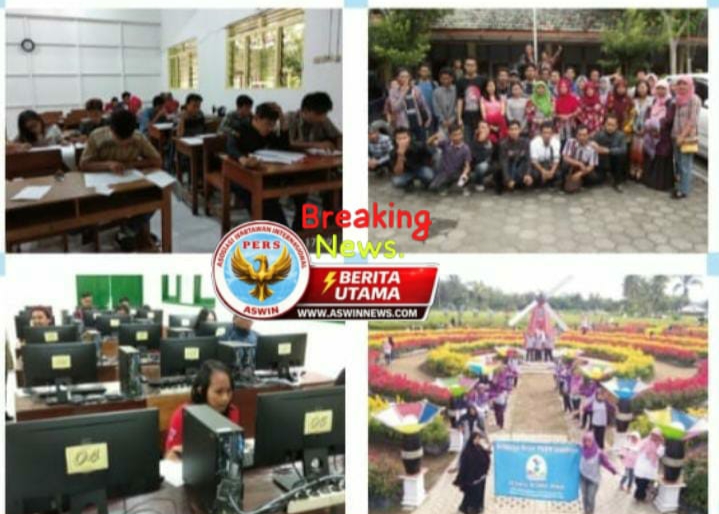
Through its various programs, the institution not only strives to educate the nation but also equips learners with skills and independence relevant to today’s needs.
The Head of PKBM Sejahtera explained that the institution offers equivalency education programs, namely Package A (equivalent to elementary school), Package B (junior high school), and Package C (senior high school). In addition, it provides homeschooling programs, tutoring, skills training, literacy education, and a community reading center to support literacy development.
Originating from the “Education for All”
Movement
The establishment of PKBM is closely linked to the global “Education for All” movement declared in 1990 in Thailand by 155 countries through the Learning Community Center (LCC) concept.
This idea was introduced in Indonesia in 1997 and became known as PKBM.
Amid the 1998 monetary crisis, several community figures saw an opportunity to provide alternative education for those unable to access formal schooling.
From this spirit, PKBM Sejahtera was officially established on November 10, 1998, in Suryodiningratan Village, Mantrijeron District, Yogyakarta City.
The institution was initiated by Ign. Bondan Purwantoro, S.Sos, along with three administrators and six tutors. Initially, the number of learners was limited to seven in Package A and 15 in Package B.
Learning activities were held three times a week in the evening.
Development of Educational Programs
Over time, PKBM Sejahtera has shown significant development. In 2001, it conducted its first Package A and B examinations, with all participants successfully passing.
In 2003, the institution opened the Package C program with 25 initial learners, and its first examination was held in 2006.
Since 2012, the admission system, which was previously held every three years, has been changed to annual enrollment to expand access to education.
Strengthening Teaching Resources
The number of tutors has increased from six at the beginning to 25 in 2020.
Of these, 23 hold bachelor’s degrees, while two are high school graduates.
In 2013, a leadership transition occurred due to the founder’s health condition.
The leadership was then continued by Ir. Eko Ratmoko as chairman.
Funding Challenges
In its operations, PKBM Sejahtera relies on various funding sources, including government assistance through regional and national budgets, as well as voluntary contributions from learners amounting to Rp100,000 per month.
However, these contributions are not mandatory, considering that many learners come from lower-income backgrounds.
The collected funds are used for operational needs such as tutor honorariums, learning modules, and educational facilities.
The institution also faced difficult times, particularly between 2011 and 2014 when it did not receive government funding. At one point, its operational funds even dropped to zero.
Accredited and Continuously Growing
PKBM Sejahtera’s consistency in providing educational services paid off when it achieved a B accreditation in 2017.
With more than two decades of experience, the institution remains optimistic in contributing to the improvement of human resources.
PKBM Sejahtera is expected to continue playing an important role in promoting lifelong education and providing opportunities for people to attain education equivalent to formal schooling.
Vision and Mission
Vision:
To create a smart, skilled, productive, and independent society to improve their quality of life.
Mission:
To provide education in accordance with National Education Standards through Package A, B, and C programs.
To develop skills education to enhance learners’ potential.
To establish productive learning groups that can create outputs and improve independence.
To produce graduates who are able to continue their education, start independent businesses, or enter the workforce.
Author: Maztho
Yogyakarta Contributor: Edi Pribantoro, ST (Treasurer of PKBM Sejahtera)
🖊️ Journalist Report: Maztho
✍️AswinNews.com Editorial Team – Sharp, Trustworthy, Balanced, and Up-to-date